There’s a specific kind of joy that comes from sinking into something impossibly soft and shaped like a creature you loved as a child. Hamster sleeping bags tap directly into that feeling. Instead of a flat rectangle of padded fabric, these pieces take the round cheeks, stubby paws, and sleepy expression of a hamster and blow them up to human scale, turning a familiar animal into a place you can actually climb inside and rest.
What makes this category interesting is how it blurs the line between toy, furniture, and bedding. A hamster sleeping bag isn’t quite a stuffed animal, since you can lie down inside it, and it isn’t quite furniture in the traditional sense, since most people wouldn’t call a giant plush rodent a “chair.” It sits in its own category, and that oddity is exactly why it has found a following among people who want their living rooms and reading corners to feel less clinical and more like somewhere they actually want to curl up.
The Anatomy of a Giant Plush Hamster
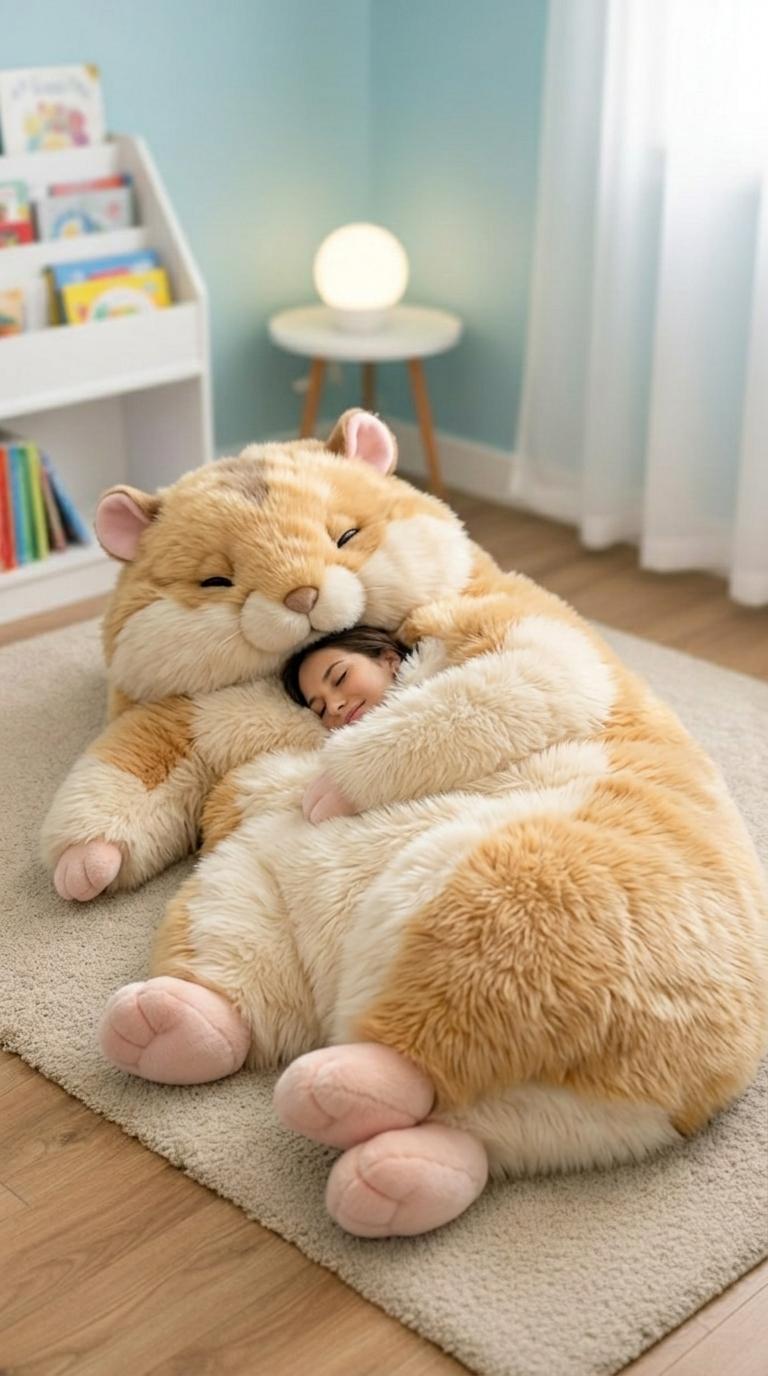
Look closely at any well-made hamster sleeping bag and you’ll notice the details that separate it from a generic pillow shaped like an animal. The head is proportioned like a real hamster’s, with round cheeks, a small pink nose, and whiskers stitched or embroidered onto the fur. The ears sit at the top, often lined with a lighter fabric on the inside to mimic the thin skin of a real hamster’s ear. Some versions have the eyes closed, giving the impression of a sleeping companion, while others have open, glossy eyes that give the toy a more alert, watchful presence.
The body extends into stubby limbs, each ending in an oversized paw with individually stitched toe pads. These paws aren’t just decorative; on most designs, they’re weighted or structured to act as bolsters, so when a person lies inside, the paws naturally curl inward and rest against their shoulders or sides. The overall shape mimics a hamster stuffing its cheeks and curling into a ball, which happens to be the exact pose that makes this design comfortable for a human body to nestle into.
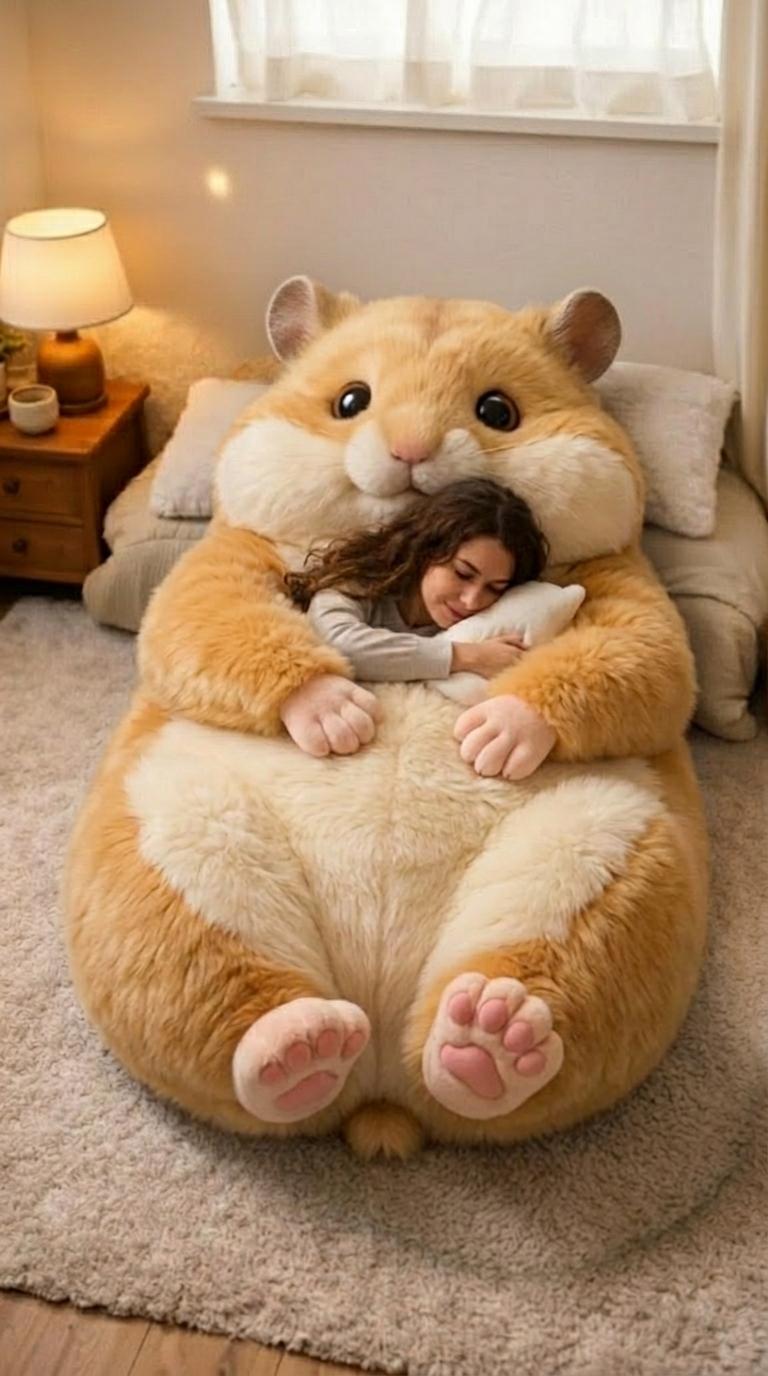
Some of the more elaborate versions go a step further and build an actual pouch into the head or chest area, essentially turning the hamster’s face into a hood a person can tuck their head into, similar to how a sleeping bag opens at the top. This design turns the toy into something closer to a burrow, letting a person’s head and shoulders disappear into the plush while the rest of the body rests along the length of the hamster’s torso and legs.
Fabric Choice and the Feel of the Fur
The softness people mention when describing these sleeping bags comes down to the fabric used for the outer shell. Most combine a long-pile plush fur with a shorter, denser fur for the underbelly and paw pads, mirroring the two-tone coloring of an actual hamster. This contrast in fur length and color isn’t just cosmetic; it also changes the texture under your hand, since the longer fur on the back and head feels different from the tighter weave on the belly panel.
Inside, the filling combines a supportive foam or fiber base with a looser stuffing for the parts meant to be hugged or leaned against. Zippers, when present, are tucked along a seam on the underside so the exterior stays smooth from most angles. The internal structure matters just as much as the fur, since the object needs to hold its shape rather than collapsing into a shapeless heap.
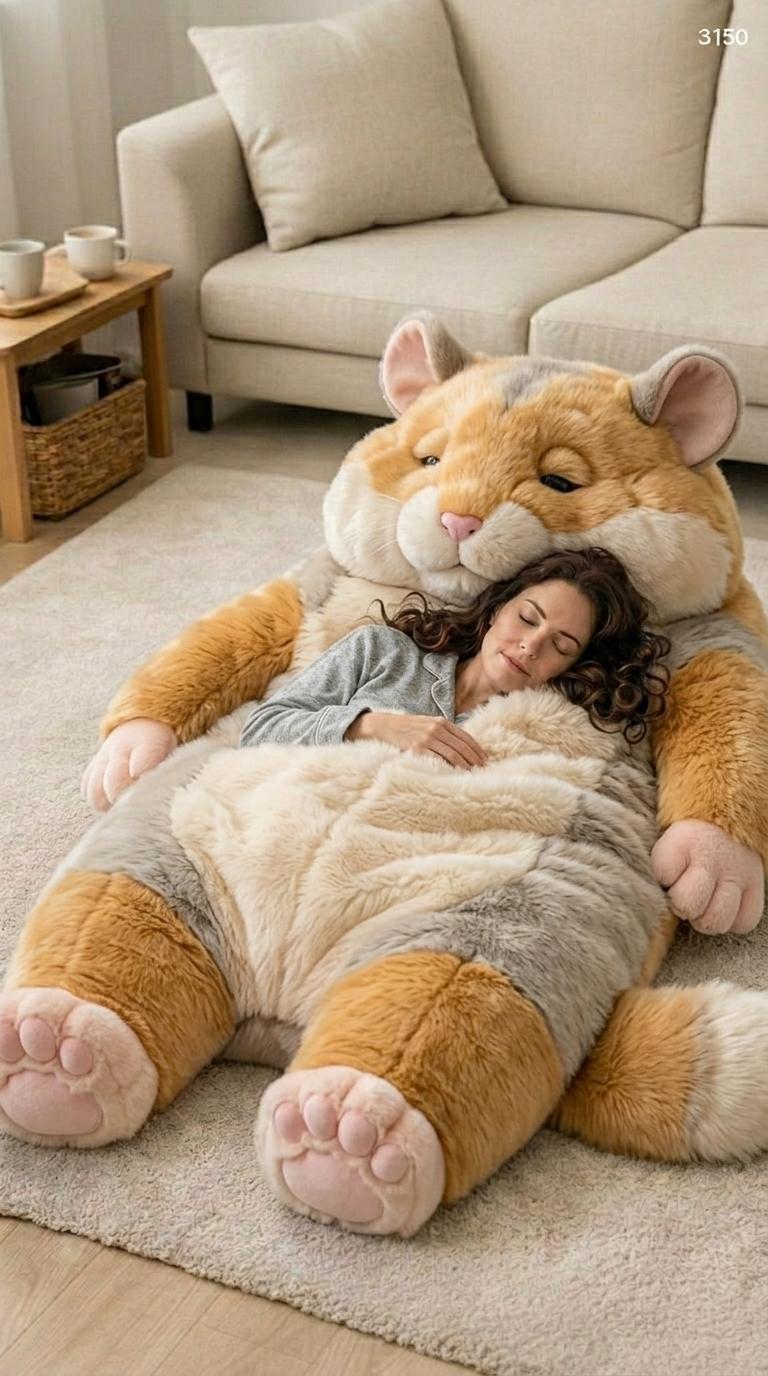
Comfort as the Central Function
Unlike a decorative stuffed animal that mostly sits on a shelf, a hamster sleeping bag is built around physical contact. The scale of these pieces, often long enough for an adult to stretch out fully, means the design has to account for how weight distributes across a reclining body. The chest and belly area tends to be the flattest, most supportive part, while the head and paws curve inward to create a sense of being surrounded rather than simply lying on a flat cushion.
This enclosed feeling explains part of why the format appeals to people looking for a sense of security while resting. Wrapping a heavy, plush limb around the body, or having a soft snout resting near the head, produces a kind of pressure and containment that some people find calming in the same way a weighted blanket does. It has less to do with the visual novelty and more with the physical sensation of being tucked into something that responds to the body rather than staying rigid.
A Piece of Furniture With a Personality
Placed in a living room, a hamster sleeping bag changes the character of the space instantly. Most furniture stays neutral by design, meant to blend into a room rather than draw attention. This does the opposite. Its face, its expression, its sheer size all make it a focal point, which is part of the appeal for people decorating a kid’s bedroom, a playroom, or a reading nook where a bit of whimsy is welcome.
In children’s rooms, the scale works especially well, since a design sized for an adult body gives a child room to sprawl out, tuck in stuffed animals of their own, or use the surrounding paws as a backrest while reading. In adult spaces, the same object tends to read as a statement piece, something between a floor cushion and a sculpture, that still functions as a genuine place to nap or watch television. Photos of people sleeping soundly with their heads resting against a giant hamster snout capture this dual identity: half toy, half legitimately usable seating.
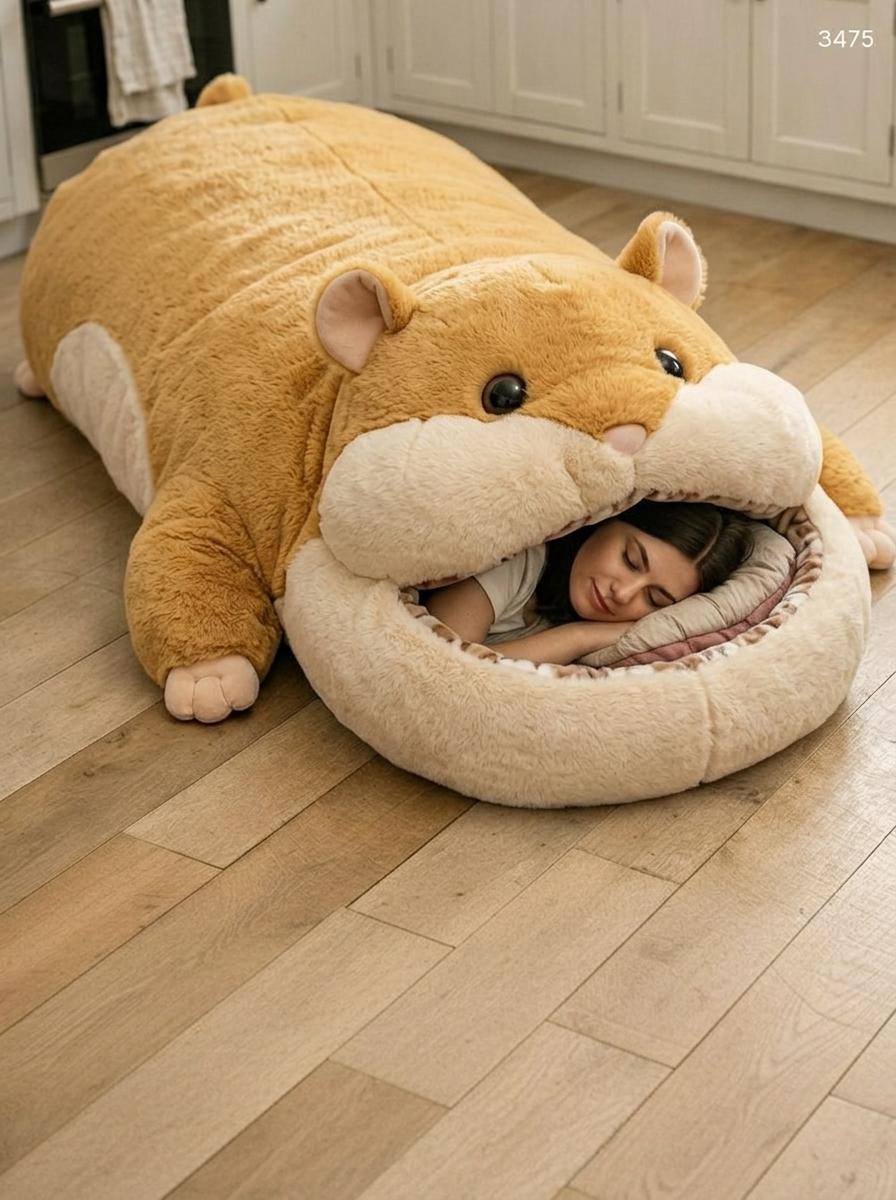
Beyond the Living Room: Outdoor and Shared Spaces
Because the outer fur is often treated to resist moisture and light staining, some hamster sleeping bags hold up reasonably well outside, spread across a lawn for an afternoon nap or brought along for a backyard movie night. The shape and give of the plush make it forgiving on grass or uneven ground in a way a hard picnic blanket isn’t, and the enclosed limbs help block a light breeze the same way they’d block a draft indoors.
Images in this post feature AI-generated concepts. The button above point to a similar, real-world item on Amazon. As an Amazon Associate, I earn from qualifying purchases.
Shared spaces such as reading corners in schools, waiting areas in pediatric offices, or communal lounges in dorms have also picked up on the format, using the animal shape as a soft, approachable landmark in a room rather than a plain beanbag or floor cushion. The character design gives people, children in particular, an easier way to identify “the comfortable spot” in a room full of more ordinary seating.
Caring for a Piece This Size
Maintaining a plush object of this scale takes a bit more thought than washing a regular stuffed animal. Most care instructions recommend spot cleaning the fur with a damp cloth and mild soap rather than machine washing the entire piece, since the internal filling can shift or clump if soaked. Regular brushing with a soft-bristled brush helps keep the long fur on the back and head from matting, particularly in areas that get the most contact, like the paws and chest panel.
Airing the piece out in a well-ventilated room every so often helps prevent the fur from trapping moisture or odor, especially when it gets used daily as a nap spot. Keeping it away from direct, prolonged sunlight also helps the dye in the fur stay even, since the tan and cream tones used for most hamster designs can fade unevenly if one side faces a window for months at a time.
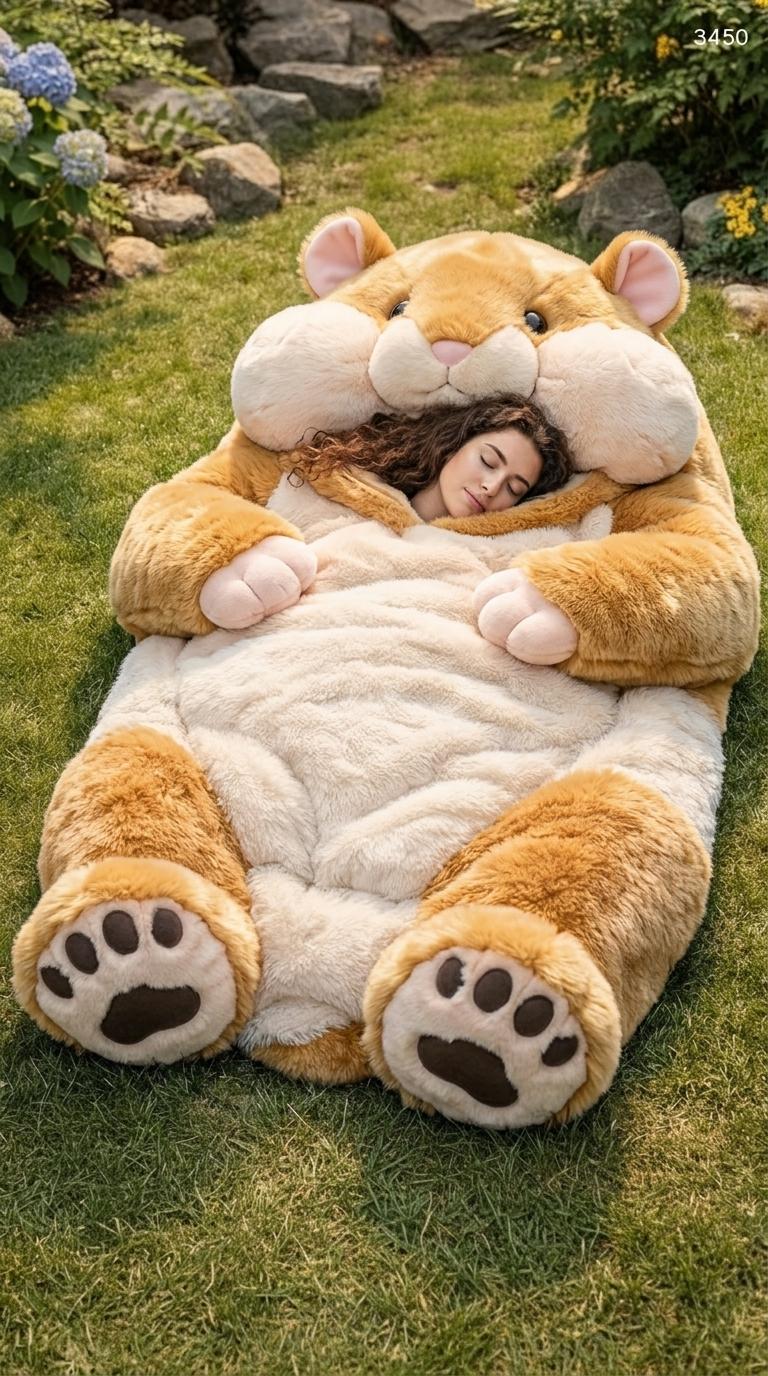
A Different Way to Think About Rest
What ties all of these design choices together is a willingness to treat comfort as something worth building a personality around. A hamster sleeping bag doesn’t try to disappear into a room the way a standard mattress topper might. It asks to be noticed, to be photographed, to be the thing a child points to and calls by name. At the same time, it still has to work as a place to actually fall asleep, which means every whisker, paw, and fold of fur has to serve the practical job of holding a body comfortably for hours at a time.
That combination, a recognizable animal character built with the structural thinking of real bedding, is what separates this object from a simple novelty pillow. It’s furniture with a face, built for the specific pleasure of disappearing into something soft and round-cheeked at the end of a long day.