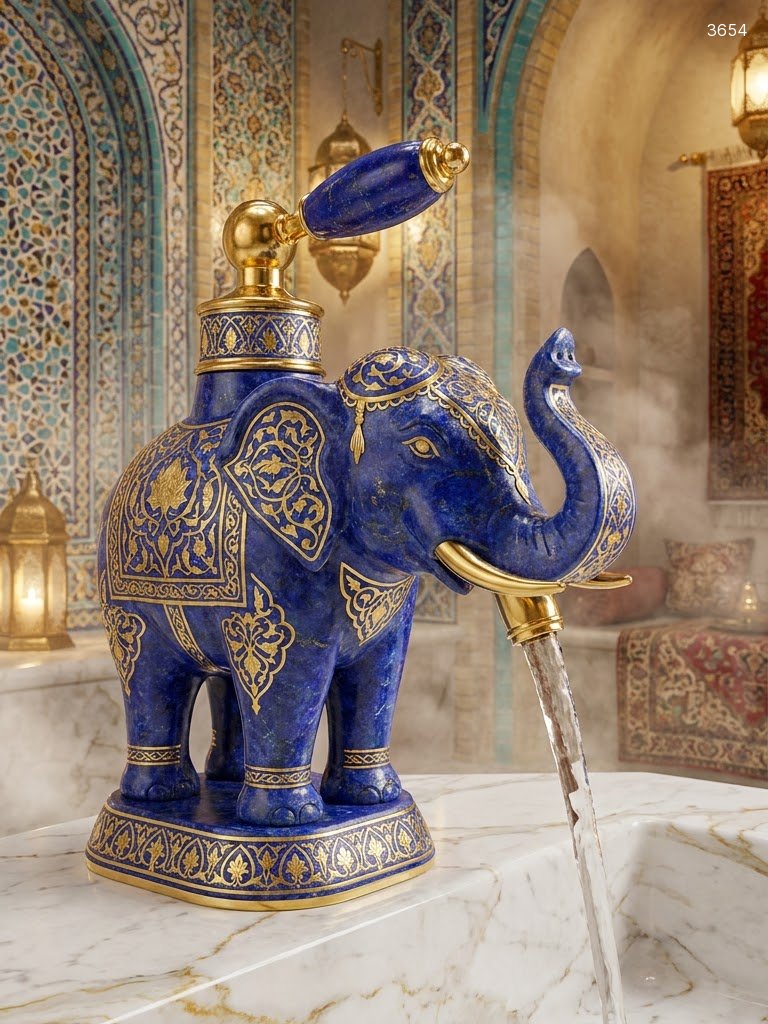
This article looks closely at what makes these fixtures distinct, how they’re built, the different finishes available, and what to think about before choosing one for your own space.
Why an Elephant Faucet Draws the Eye in a Bathroom
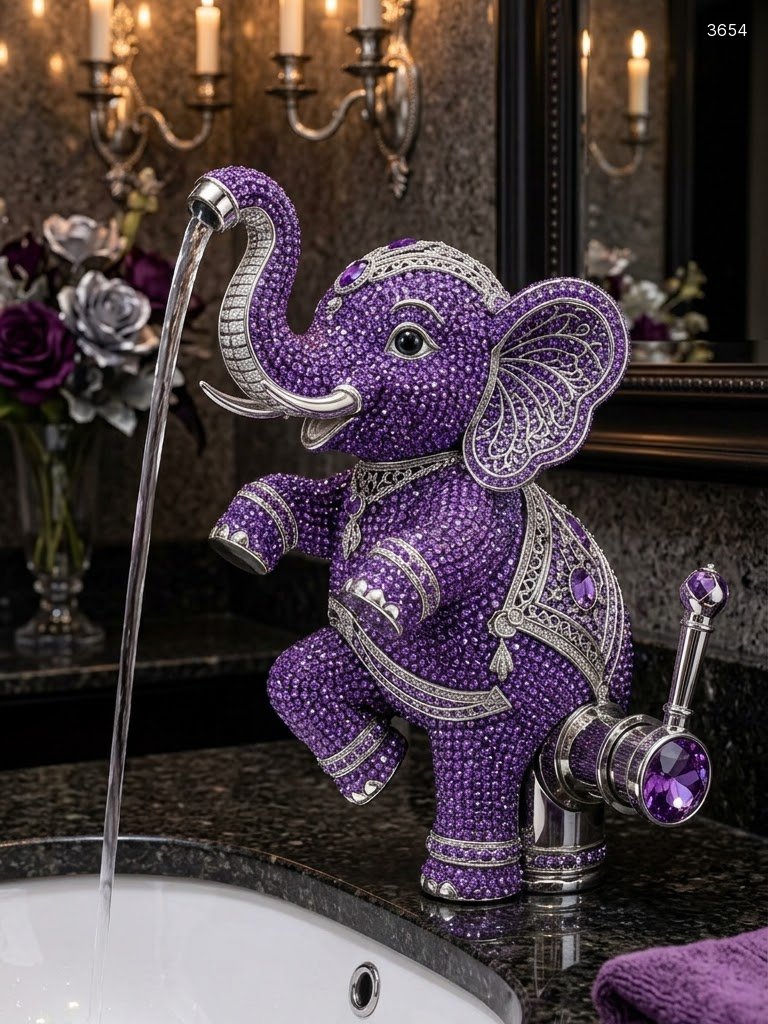
Most bathroom fixtures are designed to disappear. Chrome handles, straight spouts, and matte finishes are chosen precisely because they blend into the background and let tile or lighting carry the visual weight. An elephant faucet works against that logic entirely. The animal’s body is rendered in fine detail, from the folds around its knees to the texture of its ears, and the trunk itself becomes the water spout. Instead of hiding the plumbing, the design makes the plumbing part of the sculpture.
The result is a fixture that behaves more like a decorative object than a utility item. Guests notice it. Photos of the bathroom center on it. And because the surrounding decor — mirror frames, vases, soap dishes — often gets chosen to match, the elephant faucet frequently sets the tone for the whole room rather than the other way around.
The Craft Behind Every Crystal Elephant Faucet
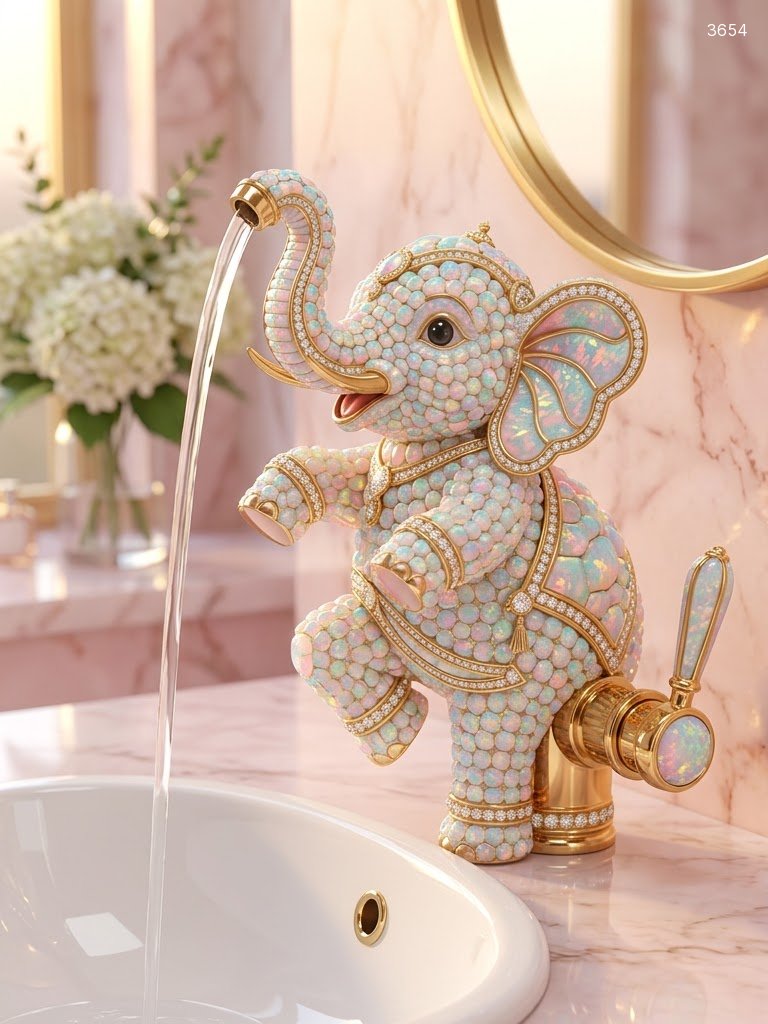
These fixtures are not stamped out of a single mold and painted. The body of the elephant is typically cast first, then covered by hand with hundreds or even thousands of individually placed crystal or rhinestone beads. Each row has to follow the curve of the animal’s form — around the trunk, over the rounded belly, along the ears — which means the placement work is done by trained artisans rather than machines. A single piece can take many hours of labor before the gold-toned metal fittings, valve, and spout mechanism are even attached.
The internal hardware — the valve body, the water inlet, the cartridge that controls flow — is built separately using standard faucet engineering, then integrated into the sculpted shell. This two-part construction is what allows the piece to function as ordinary plumbing while looking nothing like it. The gold-finished side lever, visible in most versions, operates temperature and flow the same way a conventional single-handle tap would.
Materials and Color Variations
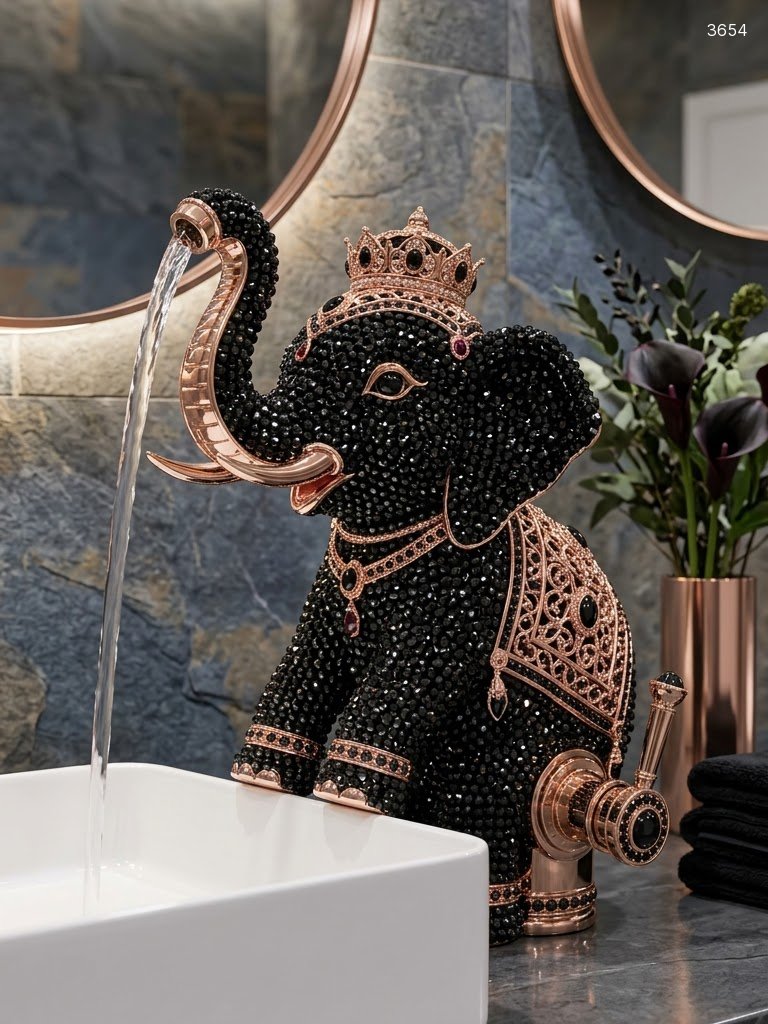
Because each elephant faucet is decorated with a dense layer of small stones, the surface finish becomes the main way these pieces are differentiated from one another. Some of the most common variations include:
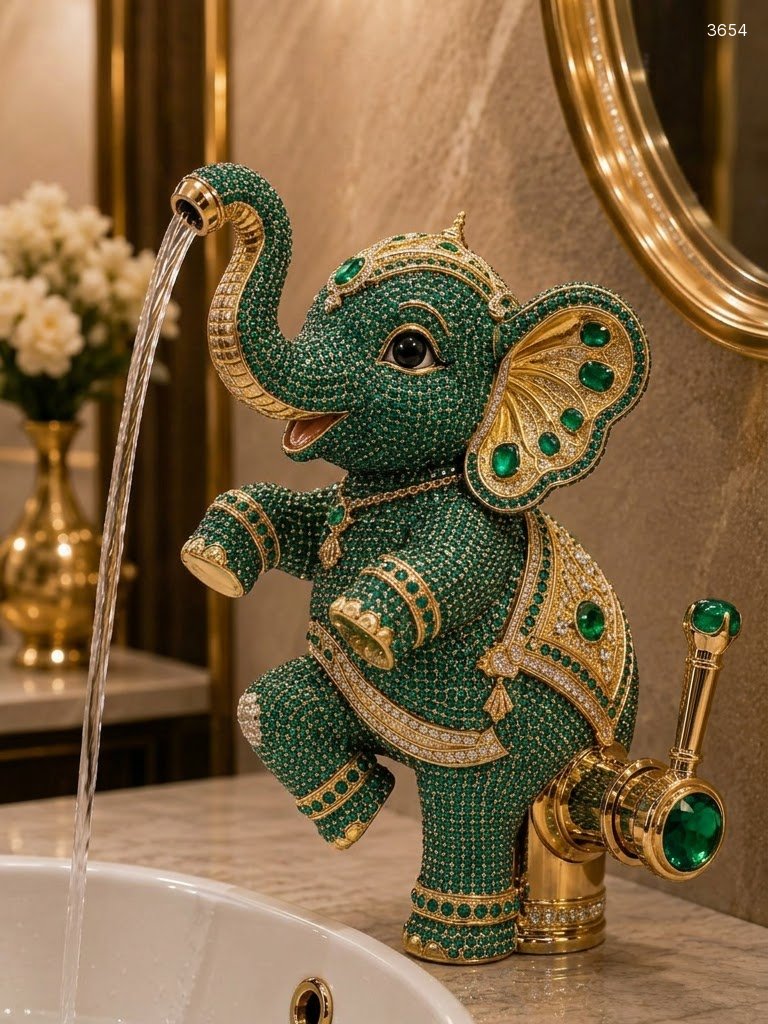
- Teal and turquoise tones with peacock-pattern ears, often paired with dark emerald or jade-colored backdrops.
- Deep sapphire blue finishes, sometimes topped with a small crown motif, giving the piece a more regal, ornamental character.
- Pearl white beadwork with gold trim, which tends to suit softer, more traditional bathroom palettes.
- Ruby red versions with gold banding, offering a bolder, warmer look suited to dark wood interiors.
- Rose gold and iridescent pearl combinations, which lean toward a lighter, more contemporary aesthetic with etched floral patterns instead of dense beadwork.
The base metal underneath is almost always brass, chosen for its resistance to corrosion in a wet environment and its ability to hold plating well over time. Gold plating is applied to the trunk tip, legs, and side valve components, which is also where most of the physical wear from daily use will eventually show.
Trunk-as-Spout: How the Water Flow Actually Works
The most functional detail of an elephant faucet is also its most visually striking one: the raised trunk doubles as the spout. Water travels up through the base of the fixture, through the body, and exits from an aerator fitted at the tip of the trunk. Because the trunk is angled upward and then curved, the water falls in a controlled arc rather than a straight drop, which is part of why these pieces photograph so well next to a sink basin.
The side-mounted lever, usually shaped like a small jeweled column, controls both water temperature and volume, functioning the same as a standard single-lever mixer tap. Some versions include a secondary handle or dial rather than a lever, but the underlying mechanism is consistent across most designs on the market. Water pressure and flow rate depend on standard household plumbing rather than anything specific to the elephant shape, so performance is comparable to a conventional faucet of similar quality.
Matching an Elephant Faucet to Your Bathroom Style
Because the fixture carries so much visual weight on its own, the rest of the bathroom benefits from a slightly restrained approach. A busy, richly patterned wallpaper next to a heavily jeweled elephant can start to compete for attention rather than complement it. Many of the interiors these faucets appear in lean on one strong background color — deep teal, navy, burgundy, or soft ivory — paired with gold trim on mirrors, taps, and accessories to tie everything together.
Marble or stone countertops tend to work particularly well underneath these fixtures. The cool, veined surface of natural stone gives the crystal-covered elephant a bit of visual breathing room, and the gold accents in the marble veining often echo the plating on the faucet itself. In more minimalist bathrooms, a single elephant faucet can serve as the one ornamental element in an otherwise plain space, letting the fixture stand out precisely because nothing else nearby is competing for attention.
Cultural Meaning Behind the Elephant Motif
Elephants show up repeatedly in home decor across many cultures, and that pattern isn’t accidental. In several Asian traditions, the elephant is associated with strength, wisdom, and family stability, and a raised trunk in particular is often read as a gesture tied to good fortune. Figurines with an upward-curled trunk are commonly placed near entryways or water sources in homes that follow these customs, which makes a bathroom faucet shaped this way feel less like a novelty item and more like an extension of a much older symbolic practice.
Outside of that specific symbolism, elephants are also just widely regarded as calm, protective animals in general Western decor as well, which is part of why the motif translates so easily into different interior styles — from opulent, jewel-toned bathrooms to lighter, more pastel-driven ones like the rose gold and iridescent pearl finish. The animal carries enough universal, positive association that it rarely feels out of place, regardless of the surrounding design language.
Installation Notes Worth Knowing
Because the sculpted body sits above the counter and the plumbing connections run down through the base, these fixtures generally require a single-hole or widespread sink setup, similar to standard vessel sink faucets. The exact hole spacing and mounting hardware can vary between manufacturers, so checking the base dimensions against your sink or countertop cutout beforehand avoids a mismatch. Standard flexible supply lines are usually compatible, and the internal valve works with typical hot and cold water connections found in most residential plumbing.
Weight is worth considering too. Between the brass body, the metal fittings, and the dense stone coverage, these pieces are noticeably heavier than a typical faucet, so the countertop or vanity surface needs to be solid enough to support that weight without stress on the mounting bracket over time.
Keeping the Crystals and Gold Plating Looking Sharp
Daily maintenance matters more with a decorative fixture like this than with a plain metal tap, mainly because water spots and soap residue show up more visibly against a textured, bead-covered surface. A soft, dry cloth wiped over the piece after use helps prevent mineral buildup from hard water, especially around the base where water tends to pool. Harsh abrasive cleaners or anything containing bleach should be avoided, since they can dull the gold plating and, over years of use, loosen the adhesive holding individual crystals in place.
For routine cleaning, a barely damp microfiber cloth is usually enough to lift dust from between the beads. Areas that see the most hand contact — the side lever and the trunk tip — tend to show plating wear first, simply from repeated touching, which is normal for any gold-finished fixture over an extended period of daily use.
Final Thoughts
An elephant faucet asks a bathroom to do something most bathrooms never attempt: hold a piece of decorative sculpture that also happens to run water. The craftsmanship involved — hand-set crystals, brass construction, gold plating over a functioning valve system — puts it closer to a jewelry piece than a standard hardware fixture, and the range of color finishes means it can fit into settings as different as a deep jewel-toned powder room and a soft pastel guest bath. Whether the appeal comes from the symbolism attached to the animal, the sheer detail of the beadwork, or simply the novelty of water pouring from a raised trunk, the fixture earns its place as more than background hardware. It becomes something people actually stop and look at.