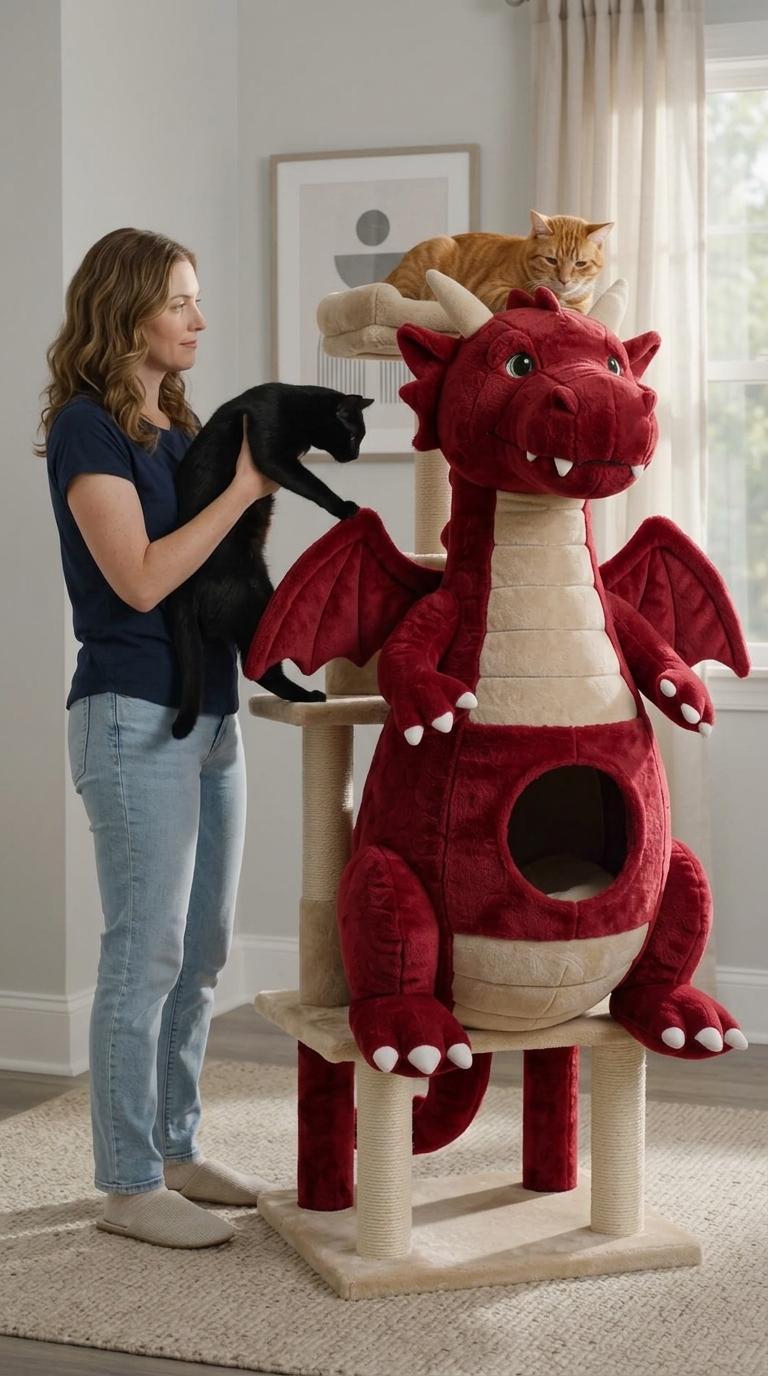
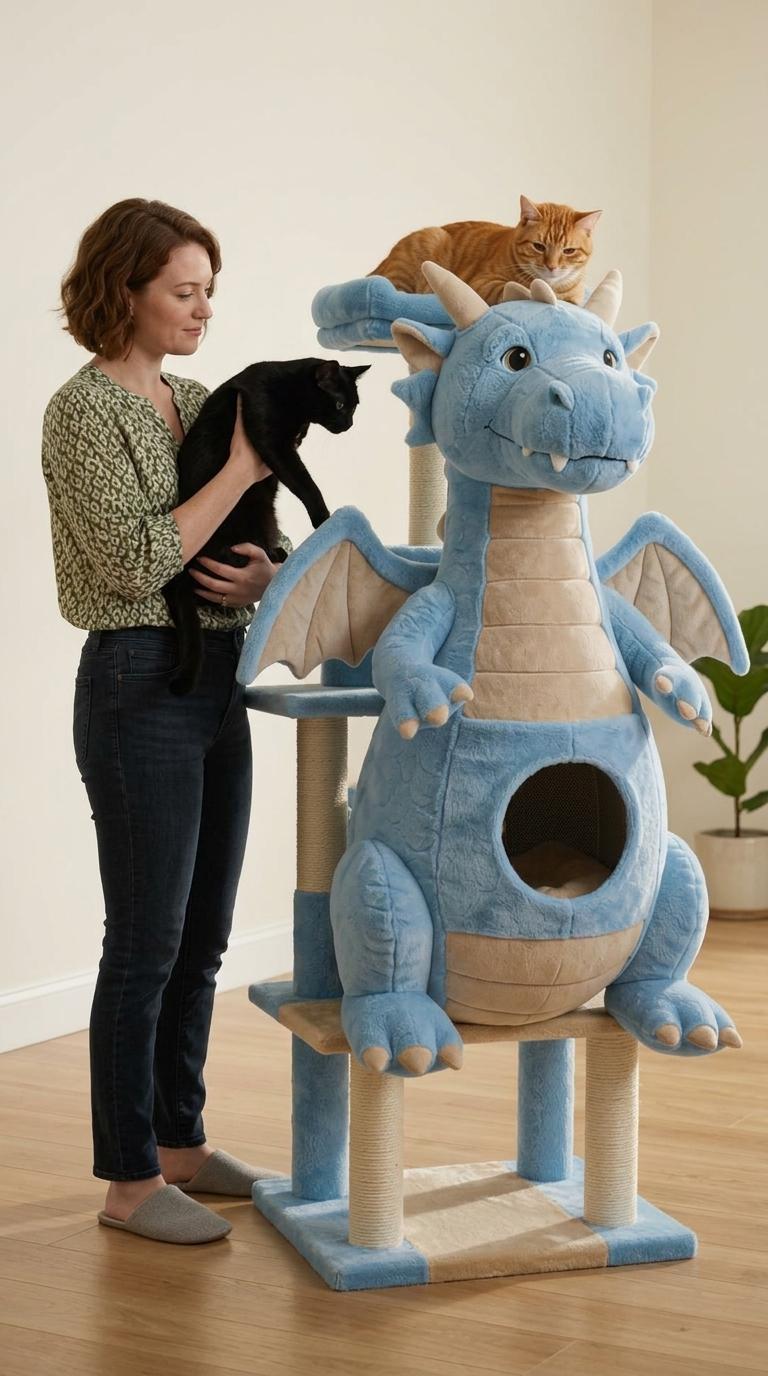
Walk into a room with one of these and the cat tree stops being furniture in the corner — it becomes the room. A dragon shaped cat playground stands taller than most bookshelves, with folded wings, a horned head, and a round cave built right into its belly. It looks like a prop from a fantasy film, except two cats are currently arguing over who gets the top perch.
That mix is really the point. Underneath the sculpted plush exterior, this is still a working cat tree: sisal-wrapped scratching surfaces, an enclosed hideout, and multiple perches at different heights. The dragon shape isn’t decoration layered on top of a normal cat tower — the wings, neck, and belly are the tower.
The Anatomy of the Design
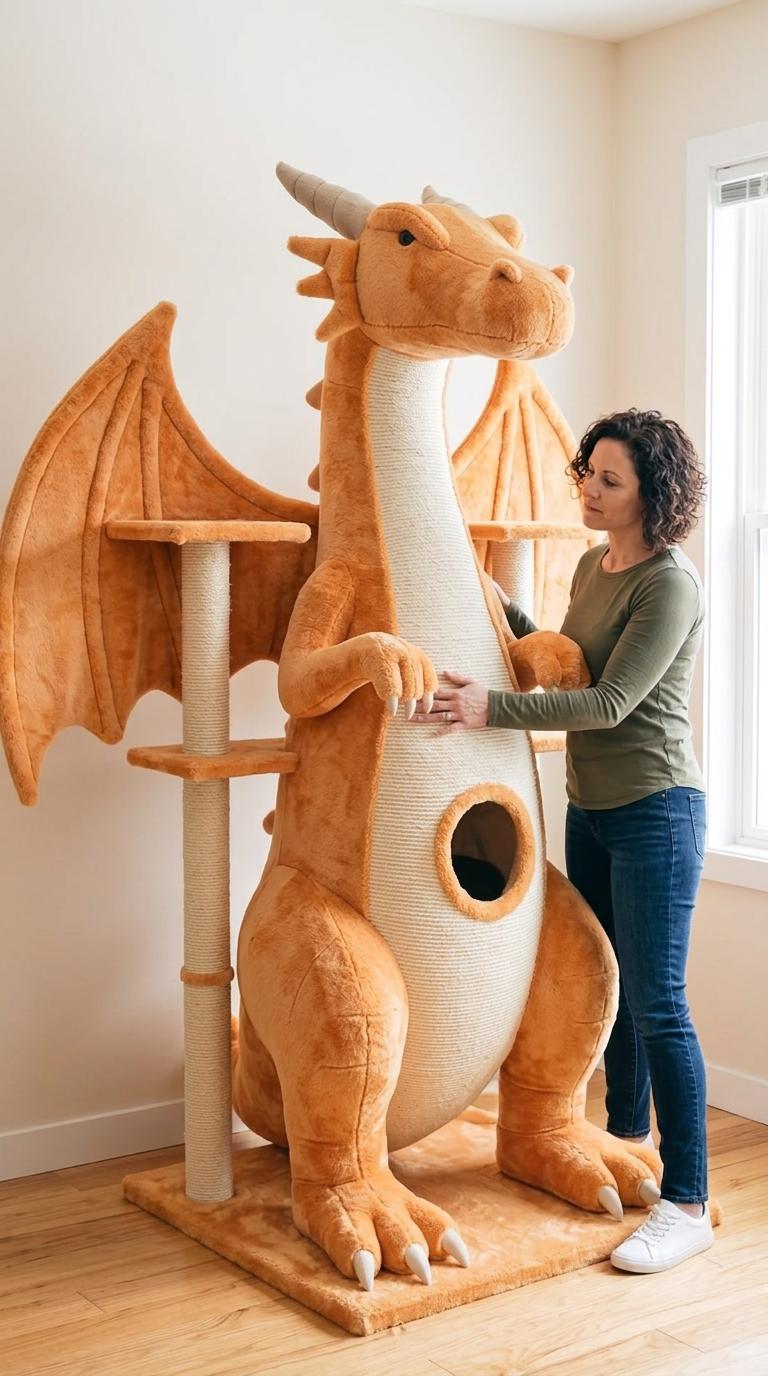
The layout follows the dragon’s actual body. A wide, carpeted base gives the whole structure its footing, with four sisal-wrapped legs rising up to support the dragon’s torso. The long neck, also wrapped in coiled sisal rope, doubles as the main scratching post and stretches up toward a horned head that sits at the very top, usually with a small flat platform tucked just behind it. Two wings extend outward on either side, each one forming a raised shelf a cat can stand or stretch out on. Lower down, set into the round belly, is an open cave with a soft interior — the same shape as the entry hole on any standard cat condo, just reimagined as part of a dragon’s stomach.
Every one of those features already exists on ordinary cat trees. What’s different here is that they’re stitched into a single continuous creature instead of stacked as separate boxes and tubes.
Why the Cave Matters
Cats look for tight, enclosed spaces on instinct — it’s why a cat will choose an empty cardboard box over an expensive bed sitting three feet away. The cave built into the dragon’s belly answers that instinct directly. It sits low enough for a cat to walk straight in without needing to jump, and the opening is round and just wide enough for one cat to slip through, which matters more than it sounds. A narrower, defined entrance makes the space feel secure rather than exposed, since the cat inside can watch the entrance without being seen from every angle.
For a nervous or newly adopted cat, that little chamber can become a home base — somewhere to retreat to when the house gets loud, when guests come over, or when another pet gets a bit too curious. For a confident cat, it’s just a good nap spot with soft walls and decent air flow.
Scratching Posts Woven Into the Body
Scratching isn’t optional behavior for a cat — it’s how claws shed their outer sheath, how muscles stretch after sleep, and how a cat marks territory with the scent glands in its paws. A dragon shaped cat playground handles this by wrapping the neck and legs in tightly bound sisal rope, the same rough, fibrous material used on standalone scratching posts.
Because the neck runs vertically from the base almost to the head, it gives a full-body stretch — front paws reaching high while the back legs stay grounded, which is the posture cats naturally default to when a post is tall enough. The wrapped legs offer shorter scratching surfaces near the base for cats that prefer to work at floor level instead. Having both heights on one structure means the scratching post isn’t a separate purchase sitting somewhere else in the room; it’s already built into the thing the cat is climbing on anyway.
Wings as Steps, Head as Lookout
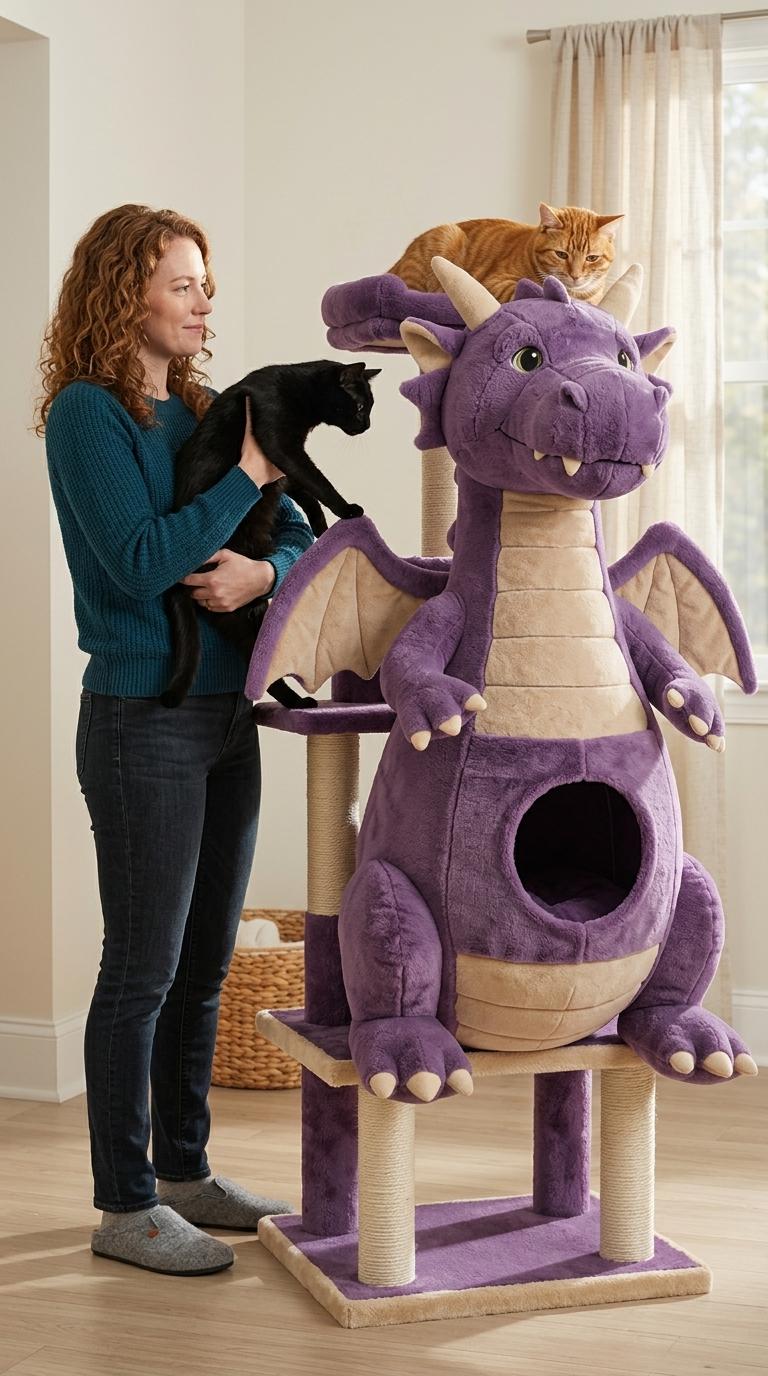
The two wings aren’t just visual flourishes. Positioned at staggered heights on either side of the body, they function as stepping platforms — a cat can hop from the base, up onto the lower wing, then the upper wing, and finally reach the flat perch near the dragon’s head. It’s essentially a staircase disguised as folded wings.
That top spot matters for reasons beyond bragging rights among housemates. Cats are natural climbers with a strong preference for surveying their surroundings from above, a habit tied to their instincts as both small predators and potential prey. A perch several feet off the ground lets a cat watch the room, the window, or the door without needing to stay alert at floor level. In the photos, it’s almost always the same spot an orange tabby claims first — settled right on top of the dragon’s head, looking distinctly pleased about it.
Space for More Than One Cat
Multi-cat households run into a familiar problem: cats don’t naturally want to share a single resting spot, and floor-level competition over one cat bed or one windowsill can turn into low-grade tension. Vertical space helps solve this because it multiplies the number of good spots without multiplying the square footage a home actually has.
A structure like this offers several of those spots at once — the cave, the two wing platforms, the crow’s nest near the head — so two or three cats can each claim their own territory on the same piece of furniture. One cat curled up in the belly cave and another stretched out on a wing platform aren’t competing for anything; they’re just occupying different floors of the same building. That’s a meaningful difference in a household where cats are still working out the pecking order.
Six Dragons, Six Different Moods
The core structure stays the same across every version — cave, wings, sisal neck, horned head — but the color changes the personality of the piece entirely. A deep crimson dragon with a cream belly and ivory horns reads almost like a storybook illustration. A sky-blue version with the same tan underbelly feels softer and less imposing, more suited to a nursery-adjacent room or a lighter color palette. Deep purple leans dramatic, forest green looks like it wandered out of an overgrown fairy tale, and a warm amber-orange version sits somewhere between the two, with pale ivory horns and claws that stand out against the fur.
Because the shape and proportions are identical across colors, the choice mostly comes down to what fits the room rather than which one performs differently. A cat doesn’t care whether the cave is red or blue — but the humans sharing the living room usually do.
Materials That Hold Up to Daily Climbing
A piece this size needs to survive actual cats jumping, climbing, and clawing at it every day, not just look good in a photo. The exterior is a dense plush fabric, soft enough for lounging but woven tightly enough to resist snagging from regular claw contact. The scratching surfaces on the neck and legs use coiled sisal rope rather than fabric, since sisal is the one material that holds up to repeated, deliberate scratching without fraying apart within weeks.
The base is wide and low, usually covered in the same plush material as the rest of the body, and it’s weighted and sized to keep the whole structure stable even when a cat launches off the top perch. Given that the finished piece stands taller than most adults’ shoulders, that stability at the base isn’t a small detail — it’s what keeps four feet of dragon from wobbling every time a cat decides to use it as a launchpad.
Finding the Right Spot for It
Because of the height and the wingspan, this isn’t a piece that tucks unnoticed into a small nook. It needs enough floor space to sit fully open, with the wings extended and enough clearance overhead for the head and top perch. Corners work well structurally, but a spot near a window gives the top perch an actual view, which cats tend to make good use of once they discover it.
It’s also worth thinking about walking paths in the room. A structure with this much of a footprint changes how furniture and traffic flow around it, so most households end up treating it less like an accessory and more like a fixed piece of furniture when planning a layout.
A Centerpiece That’s Still Doing Its Job
What makes a dragon shaped cat playground different from a standard beige cat tower isn’t the scratching post or the cave on their own — plenty of cat furniture has both. It’s that the entire structure commits to one shape, using the dragon’s actual anatomy to house every one of those functional pieces instead of bolting them onto a generic frame. The wings hold weight, the neck takes claws, the belly holds a cat curled up asleep, and the head gives the highest cat in the house something to look smug about.
For a home with one cat or three, the appeal ends up being the same: a single piece of furniture that gives cats the climbing, scratching, and hiding spots they’re already looking for, built into something that doesn’t look like it belongs in a pet store aisle.